

Brazilian Soccer in Action: Investments, Opportunities, and the Boost from the 2027 Women’s World Cup
Men’s and women’s soccer are opening up new avenues for investment in Brazil. With the 2027 Women’s World Cup, the country has the opportunity to accelerate infrastructure development, professionalization, inclusion, and sustainable business opportunities in the sport.
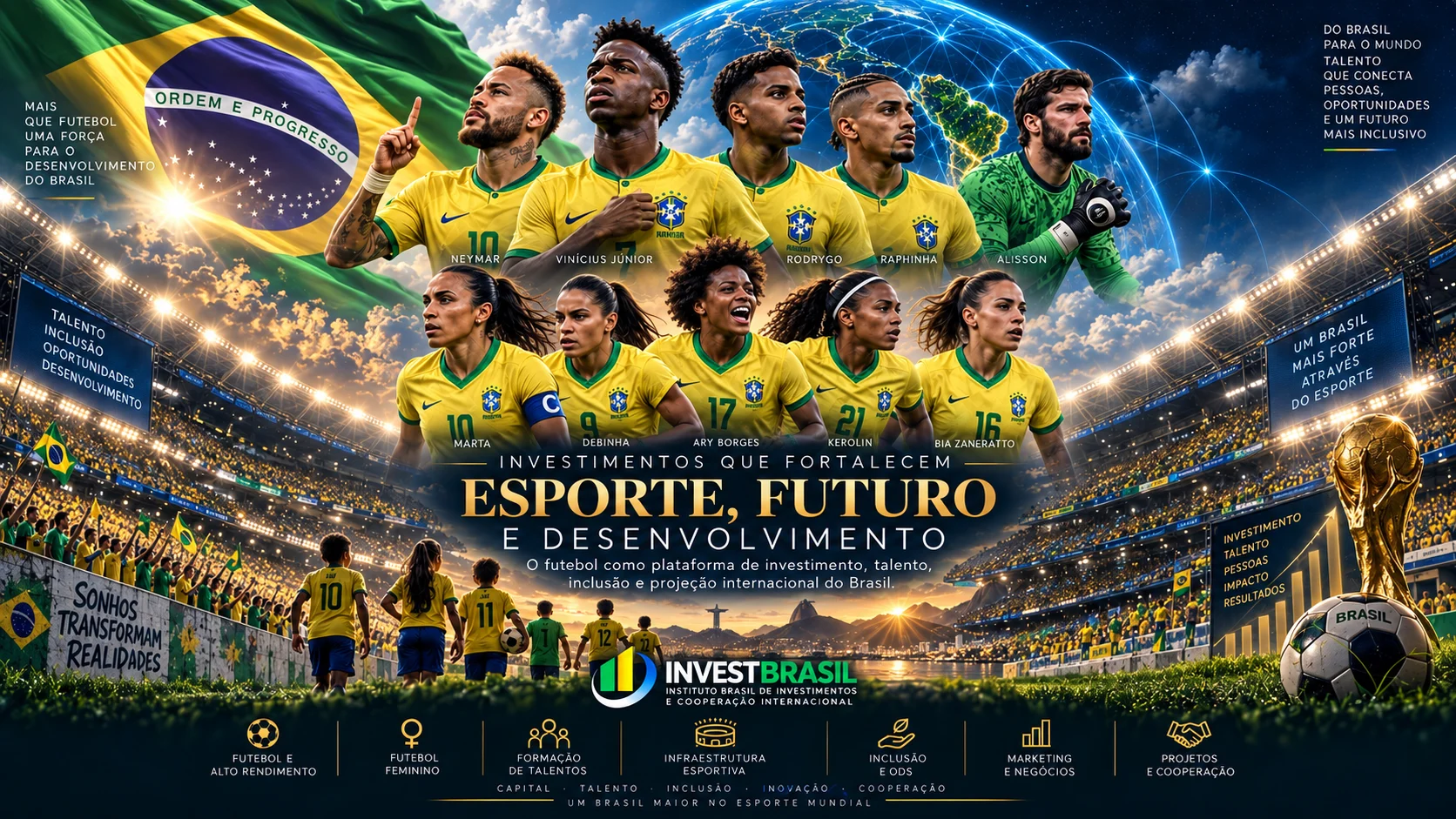
Soccer holds a unique place in Brazil’s economy and identity. In addition to mobilizing millions of fans, the sport drives broadcasting rights, sponsorships, ticket sales, tourism, technology, athlete development, commerce, and services. For investors, clubs, companies, and governments, the challenge now is to transform this cultural force into a more professional, sustainable, and inclusive ecosystem.
In men’s soccer, the rise of publicly traded soccer clubs has intensified the debate over club governance, capitalization, and financial recovery. The influx of investors can fund training centers, stadium upgrades, youth development programs, performance analysis, digital platforms, and the international expansion of club brands. Capital, however, must be accompanied by responsible management, transparency, and long-term planning. Investment without governance may merely postpone problems; with adequate controls, it can increase revenue, competitiveness, and institutional value.
There are also opportunities beyond the major clubs. Regional teams, state championships, sports academies, sports technology companies, and youth development programs make up an extensive ecosystem. Solutions for ticket sales, fan engagement, injury prevention, data analysis, and game broadcasts can boost the efficiency of organizations of all sizes. This market fosters partnerships between sports, innovation, education, and entertainment.
In women’s soccer, the potential for growth is particularly significant. The sport has been gaining an audience, attracting new sponsors, and securing a greater presence on sports calendars, but it still faces significant disparities in infrastructure, compensation, media coverage, and access to training. This creates opportunities for investments that can generate both economic returns and social impact.
Investing in women’s soccer should not be viewed merely as a promotional extension of men’s soccer. The sport has its own audience, narratives, athletes, and commercial potential. Clubs and brands can develop specific products, membership programs, fan experiences, and digital strategies tailored to communities that have not yet been fully served by the traditional sports market.
Athlete development is one of the most promising areas. Accessible youth programs, grassroots competitions, coaching training, physical conditioning, sports medicine, and talent identification can increase the number of girls who stay in the sport. Investment in these grassroots programs strengthens clubs, national teams, and leagues, while also creating professional opportunities both on and off the field.
The 2027 Women’s World Cup in Brazil represents a historic opportunity to accelerate this transformation. Beyond simply hosting matches, the country will be able to use the tournament as a platform to attract visitors, promote brands, train professionals, and stimulate investment in sports and urban infrastructure. The hospitality, food service, transportation, communications, security, tourism, and creative industries are all likely to be part of this chain of opportunities.
The most valuable legacy, however, will depend on the decisions made before and after the competition. Facilities used in the tournament must have plans for their ongoing use. Training programs must continue after the event concludes. Publicity campaigns must result in consistent schedules, sustainable contracts, and better conditions for athletes and professionals in the sport.
Companies interested in participating in this cycle can get involved in a variety of ways: sponsoring teams and competitions, funding youth programs, producing content, creating fan experiences, providing data solutions, modernizing facilities, and implementing social impact programs. There is room for both large corporations and local businesses based in the cities that will host tournament-related activities.
For the government, the priority should be to coordinate investments that provide lasting benefits. Improvements in mobility, accessibility, safety, and connectivity can benefit residents, tourists, and entrepreneurs. Transparent processes, measurable goals, and coordination among different levels of government help reduce risks and maximize the social return on the resources allocated.
Clubs, in turn, can seize this opportunity to integrate men’s and women’s sports into a coherent institutional strategy, while preserving the unique characteristics of each. Governance, business planning, professional development, and the collection of reliable data will be crucial to attracting investors seeking sustainable results.
Another key point is the diversity of careers associated with soccer. The growth of women’s soccer can create opportunities for female coaches, referees, doctors, physical therapists, analysts, journalists, executives, producers, and marketing professionals. Thus, the investment is not limited to the teams themselves: it extends to an entire job market linked to the sport.
Brazil combines a soccer tradition, entrepreneurial spirit, and a passionate fan base. The 2027 Women’s World Cup can link these strengths to a modern agenda of investment, innovation, and inclusion. Success will be measured not only by performance on the field or economic activity during the tournament, but by the ability to build a stronger soccer movement in the years to come.
Treating men’s and women’s soccer as strategic assets requires a long-term vision. With responsible capital, governance, development, and a commitment to legacy, the country will be able to transform its greatest sporting passion into an even more significant platform for business, development, and international visibility.
Help more people read this idea.
Share this article and help strengthen the debate about Brazil's future.